
CPC
chromatography
technical
.png?width=1200&height=628&name=Chiral%20Separation%20(1).png)

As discussed in the previous article, loading is one of the strongest determinants of purification cost. Increasing loading requires a chromatographic system in which the stationary phase can retain a large amount of material relative to the mobile phase.
This creates a practical conflict. The mobile phase used during loading must be weak enough for the target molecule to adsorb to the column, but such a weak eluent often has limited capacity to dissolve the sample. Increasing sample concentration may therefore require a stronger solvent, which can reduce retention and prevent adsorption at the column.
This is the central injection problem in preparative chromatography: how can a large amount of material be dissolved, transferred onto the column and concentrated into a narrow initial zone without compromising the separation?
The injected mass is determined by:
 The same mass can be introduced as a small volume of concentrated solution or a large volume of dilute solution. These alternatives create different chromatographic conditions.
Too much mass can saturate the effective stationary-phase capacity and increase band overlap. Too much volume can create a broad initial sample zone before the separation begins.
A large injection volume is not automatically problematic. If the target is strongly retained during sample loading, it can accumulate near the column inlet while the sample solvent continues through the bed. The relevant question is whether the material remains focused or begins to break through.
Consider a reversed-phase process in which the target is eluted using 40% acetonitrile.
If the target is injected in pure acetonitrile, the sample plug is a much stronger eluent than the chromatographic mobile phase. The compound may migrate inside this concentrated organic zone instead of binding near the inlet.
Possible consequences include:
Dissolving the sample in a weaker solvent improves focusing, but it may sharply reduce solubility. Two practical loading strategies can address this conflict and CPC has an extra solution.
In the 40% acetonitrile example, the sample may be dissolved in approximately 20% acetonitrile and loaded before elution begins.
Because the loading solvent is weaker than the eluent, the target is retained near the inlet. This allows a relatively large solution volume to pass through the column while the dissolved material accumulates on the stationary phase.
In one industrial application, 1,000 L of solution containing 15 kg of material was loaded onto 200 kg of silica. The crude loading was:
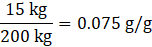 The large injection volume was possible because the material was retained during loading. The process behaved as an accumulation step rather than as a conventional large-volume sample plug.
This strategy requires:
Once target appears in the loading effluent, additional sample volume no longer produces proportional accumulation.
If the sample is poorly soluble in a weak solvent, it can be dissolved in a minimal volume of stronger solvent and diluted inside the column.
For a concentrated sample dissolved in acetonitrile, a representative sequence is:
One relative volume corresponds to the volume of the concentrated sample solution.
The first water zone reduces the local elution strength before the sample enters. The concentrated acetonitrile solution is then diluted inside the system. The following aqueous stage further reduces the local acetonitrile concentration, allowing the target to become retained before normal elution conditions are restored.
The intermediate 40% acetonitrile flush transfers residual sample from the injection pathway without introducing a large additional plug of pure organic solvent.
This procedure combines three functions:
Dissolving the sample in a weaker solvent improves focusing, but it may sharply reduce solubility. Two injection strategies address this conflict in packed-column chromatography, while CPC provides a third option because its stationary phase is also a liquid.
If your stationary phase is also a solvent you can dissolve the sample in the stationary phase too. This is a unique solution only for CPC.
CPC provides an additional injection strategy because the stationary phase is a liquid rather than a packed solid. If the target is more soluble in the stationary phase, the sample can be dissolved in that phase—or in a small volume of a compatible solvent—and introduced directly into the rotor.
The procedure can be reduced to three main steps:
During elution, the sample components divided between the stationary and mobile phases according to their partition coefficients. There is no solid column inlet where the sample must first adsorb and focus onto a packed bed. The sample solvent must still preserve phase stability and stationary-phase retention, but it does not need to provide the same focusing mechanism required in solid column chromatography.
LiLiChro frequently uses this approach during CPC method development. In one loading experiment (this is a borderline example), 2 g of crude material was introduced into a 34 mL CPC cell using only 1 mL of acetonitrile. The stationary phase consisted of 75:25 acetonitrile–water.
This corresponds to a crude loading of:
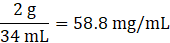
The example demonstrates the practical benefit of a liquid stationary phase: a concentrated sample can be introduced in a very small volume without requiring dissolution in the weaker mobile phase. The acceptable loading still depends on partition selectivity, phase behaviour, stationary-phase retention and the purity required from the separation.
The sample may be soluble in the injection vial but precipitate when the concentrated solution contacts water or the initial mobile phase.
Precipitation can occur in the injection loop, tubing, inlet frit or first section of the packed bed. Common indications are:
The complete solvent transition must therefore be tested, not only the solubility of the initial sample solution.
A practical assessment should mix the concentrated sample with the expected aqueous compositions and observe immediate and delayed precipitation. The test should be repeated at the intended process temperature. Low-load injections can then confirm whether the material transfers quantitatively and whether pressure returns to its normal value.
For CPC, the sample is generally introduced as a concentrated solution compatible with the selected biphasic solvent system. Distribution and dilution occur within the liquid phases, so the alternating strong- and weak-eluent sequence used for packed-column focusing is normally unnecessary.
The injection solvent must still preserve phase stability. An incompatible composition may cause precipitation, emulsion formation, temporary phase mixing or loss of stationary-phase retention.
The practical injection limit must therefore be established together with sample solubility, phase behaviour and loading.
A fully defined preparative method should specify more than injected mass. It should include sample concentration, injection volume, solvent composition, loading flow, solvent-transition sequence and acceptance criteria for pressure, purity and recovery.
Loading defines how much material the separation can process. Injection determines whether that amount can be delivered in a controlled, reproducible sample zone.